
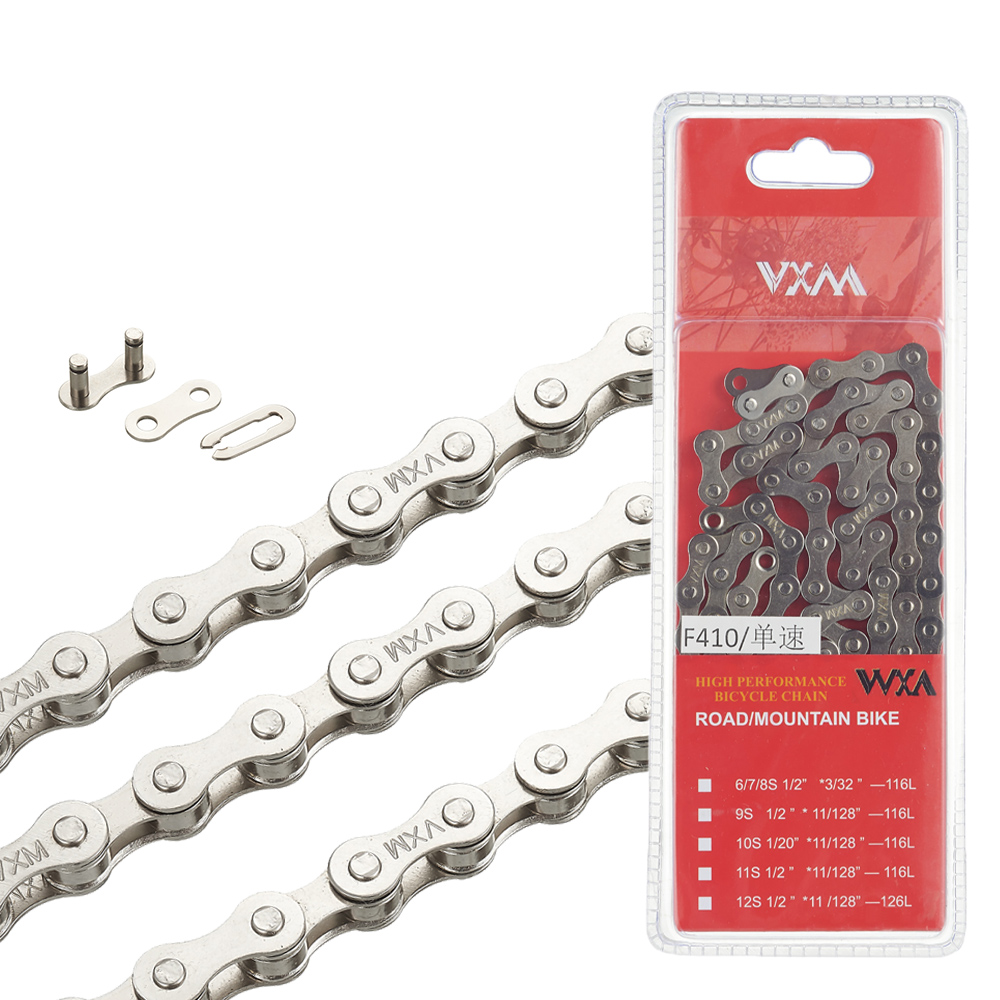
A bike chain is the core part of the drivetrain, transferring power from pedals to wheels. A poor-quality chain will cause stiff pedaling, shifting issues, strange noises and premature wear on cogs and chainrings. Here is a complete guide to help you pick the ideal chain.
1. Match Speed Level First
All bike chains share the standard 1/2-inch pitch. The main difference is inner width: higher speed groups use narrower chains.
- Single speed / Internal 3-speed: For city bikes, kids bikes. Wide, sturdy and rust-resistant.
- 6/7/8-speed: Entry-level mountain bikes, great compatibility and cost-effective.
- 9/10-speed: Mid-range sport bikes with responsive shifting.
- 11/12-speed: High-end road & mountain bikes, high precision required.
Note: A narrow high-speed chain can fit lower-speed groups, but a wide low-speed chain cannot be used on narrow high-speed cassettes. It will lead to jamming and heavy wear.
2. Material & Surface Treatment
- Material: Carbon steel for basic daily use; alloy steel for higher tensile strength and anti-stretch performance, ideal for sport riding.
- Finishing:
- Black oxide / Raw: Low price, poor rust resistance, only for dry conditions.
- Zinc / Nickel plating: Good rust protection, durable, best for commuter bikes.
- Copper + Teflon coating: Smooth, quiet, water and dust proof, perfect for long-distance riding.
- Vacuum coating / Stainless steel: Lightweight, low friction and extreme durability, for off-road and professional cycling.
Hollow pins and hollow plates reduce weight; sealed structures keep dirt out and extend service life.
3. Choose by Riding Style
- City Commute & Kids Bikes (Single/6-7 speed): Nickel-plated basic chain, focus on durability and anti-rust.
- Entry-level Mountain Bikes (8-9 speed): Alloy steel chain with basic anti-rust coating.
- Long-distance Riding (10-11 speed): Coated smooth chain with semi-sealed design.
- Off-road & Pro Riding (11-12 speed): Premium coated or stainless steel chain with full dust seal.
4. Useful Tips
Check chain length before installation. If your old chain is heavily worn, inspect cassette and chainring as well. Clean and lubricate the chain regularly after riding in wet or muddy conditions to extend its lifespan.
Final Words
You don’t have to buy the most expensive chain. Select one according to your bike speed and riding habits. A proper chain brings smooth riding and protects your whole drivetrain.