Within a bicycle hydraulic disc brake system, two tiny yet irreplaceable components stand out — the barb (insert) and olive ferrule. They form the critical sealing joint connecting brake hose to lever and caliper.
Choosing the correct fittings lays the foundation for firm brake feel and powerful stopping performance. Mismatched parts, however, often lead to oil leakage, spongy brakes, and even total brake failure, posing severe safety risks.
This complete purchasing guide breaks down all matching fundamentals for hassle-free selection.
I. Core Principle: Why Exact Compatibility Matters
Before purchasing, it is essential to understand how these two components function:
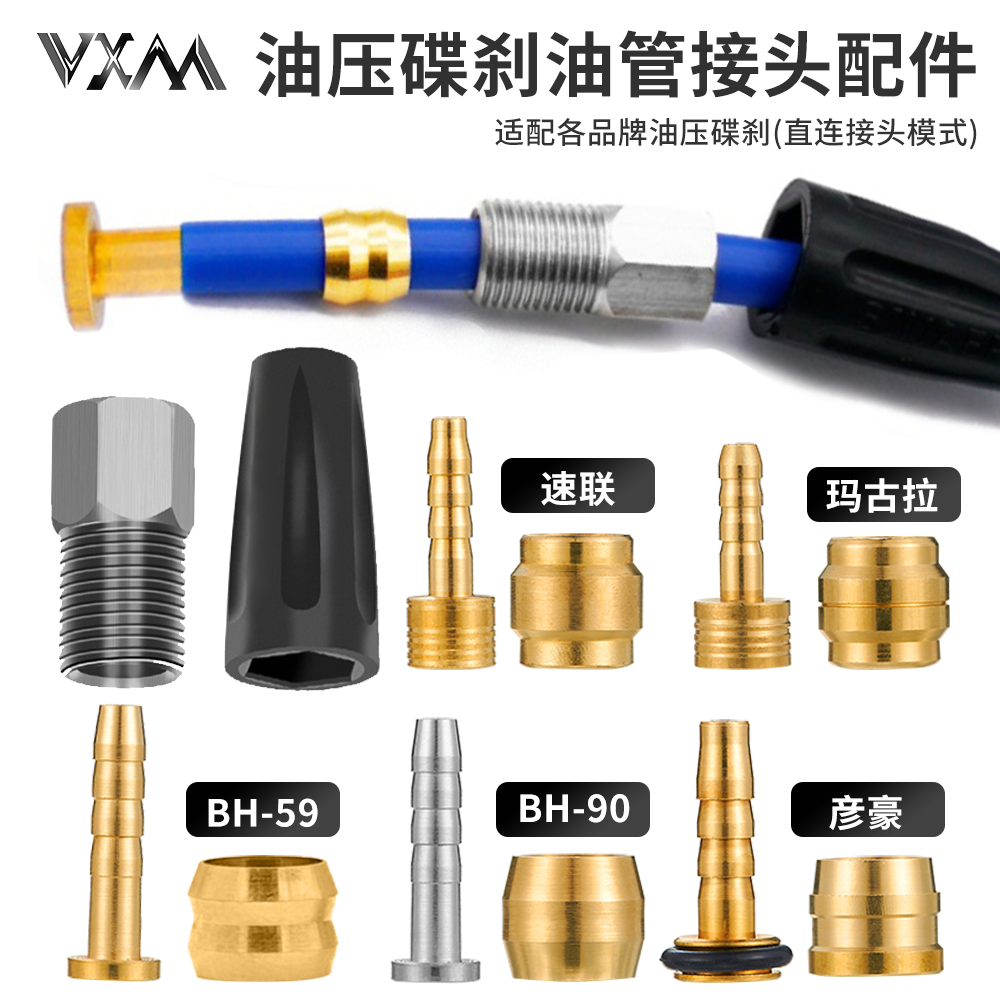
- Olive Ferrule: Typically made of soft copper. When the compression bolt is tightened, it plastically deforms and clamps tightly around the outer wall of the brake hose, forming the primary outer seal to prevent high-pressure brake fluid leaks.
- Barb (Needle Insert): A rigid metal pin inserted into the hose bore during installation. As the olive ferrule crumples under compression, the barb internally supports the hose to avoid full collapse, guaranteeing an unobstructed fluid passage.
Consequences of Mismatched Parts
- Oil Leakage: Poor sealing from incorrect dimensions lets brake fluid seep under high pressure, resulting in spongy brake feel and progressive loss of stopping power.
- Blocked Fluid Path: An oversized barb can crack the hose; an undersized one fails to provide adequate support and restricts brake fluid flow.
- Safety Hazards: Brakes are the last line of defense for riding safety. Any malfunction may trigger serious accidents.
Golden Rule: Barbs are system-specific; olive ferrules offer partial cross-compatibility.
II. 4-Step Selection Process: From Identification to Installation
Step 1: Confirm Your Brake System Specs
This is the most critical step.
- Locate the brand logo on your brake lever or caliper: Shimano, SRAM, Magura, Tektro, L-TWOO, etc.
- Find the full model marking on the lever, caliper or hose (e.g., Shimano Deore XT M8100, SRAM Guide R). This alphanumeric code is the key to checking compatibility.
Step 2: Look Up Component Specs by Brand
Once you have the model number, match the corresponding fittings below:
Shimano Hydraulic Brakes
Shimano uses two main fitting standards for different brake tiers:
- BH59
- Features: Brass barbs, thinner brake hose
- Compatible: Entry to mid-range mountain brakes (Alivio, Acera, Altus, early Deore M610 / M6000)
- BH90
- Features: Silver stainless steel barbs, thicker high-performance hose
- Compatible: Mid-to-high-end mountain brakes (Deore M6100+, SLX, XT, XTR) + all road hydraulic brakes (105, Ultegra, Dura-Ace)
- Buying Tip: Opt for BH90 kits if you own XT M8100, 105 R7000 or higher-tier brakes.
SRAM Hydraulic Brakes
SRAM compatibility is more complex. The safest method is to purchase the official hose kit specified for your brake model.
- Double Compression Standard: Fits most modern SRAM brakes (Code R, Guide, Level series)
- Threaded Crimp Standard: Reserved for select high-end models (Code RSC, Guide RSC)
- Buying Tip: Search “[Your Brake Model] hose kit”; OEM factory kits deliver the most reliable fit.
Magura / Tektro & TRP
- Magura: Nearly all models share one universal set of barbs and olives; search “Magura olive and barb kit” directly.
- Tektro / TRP: Two hose outer diameter variants exist (5.0mm and 5.5mm). Double-check hose size before checkout.
Step 3: Choose Trusted Purchase Channels
- Official brand flagship stores / authorized dealers: 100% genuine parts with full warranty
- Professional bicycle e-commerce stores: Reputable cycling specialty shops online
- Local bike shops: Offer professional consultation and on-site installation services
Red Flags to Avoid
Steer clear of suspiciously cheap counterfeit parts. Do not buy unlabeled “factory surplus” or “overstock export” fittings with unknown origins.
Step 4: Proper Installation & Critical Precautions
Even perfectly matched fittings fail without correct assembly:
- Maintain absolute cleanliness: Ensure the workspace and all parts are dust-free to stop contaminants entering the hydraulic circuit.
- Use dedicated tools: A sharp brake hose cutter creates a flat, clean cut; a hose press tool seats barbs and olives fully.
- Single-use only: Olive ferrules deform permanently during crimping. Always install brand-new olives every time you reconnect the hose.
- Full brake bleed post-installation: Complete fluid refilling and air bleeding for consistent brake performance.
III. Frequently Asked Questions (FAQ)
Q: Can I fit Shimano BH90 barbs and olives on L-TWOO GRT road hydraulic brakes?
A: Yes. Extensive real-world testing and market feedback confirm solid cross-compatibility between L-TWOO GRT series road mineral oil brakes and Shimano BH90 fittings. L-TWOO designed its hydraulic system to align with mainstream Shimano mineral oil standards. A complete BH90 fitting kit is recommended for replacement.
Conclusion
The core of selecting barbs and olive ferrules lies in precise compatibility. Follow the four-step workflow: Confirm Brake Model → Verify Fitting Specs → Source Authentic Parts → Complete Standard Installation.
These tiny fittings directly impact riding safety and should never be overlooked. This guide eliminates oil leakage troubles and delivers stable, dependable braking performance for every ride.